


Beyond Looks: How Phone Case Design Really Affects Protection
Posted by New Case on 7th Mar 2026
Choosing a new phone case often starts with aesthetics—a favourite colour, a unique pattern, or a sleek finish. While personal style is important, the actual design and engineering of a case are what truly stand between your phone and a costly accident. Understanding how specific features contribute to phone case design protection can help you make a much more informed choice.
A case's ability to safeguard your device isn't just about being a thick barrier. It's about smart design that anticipates real-world mishaps, from a fumble while getting out of the car to an accidental slide off a kitchen counter. The most effective cases use a combination of materials and structural elements to absorb and deflect impact.
Key Design Elements for Superior Protection
When you look closely at a well-designed case, you'll notice subtle features that serve a significant purpose. These elements are engineered to protect the most vulnerable parts of your phone without adding unnecessary bulk. They work together to provide a comprehensive defence system.
Raised Edges: Your Screen's First Line of Defence
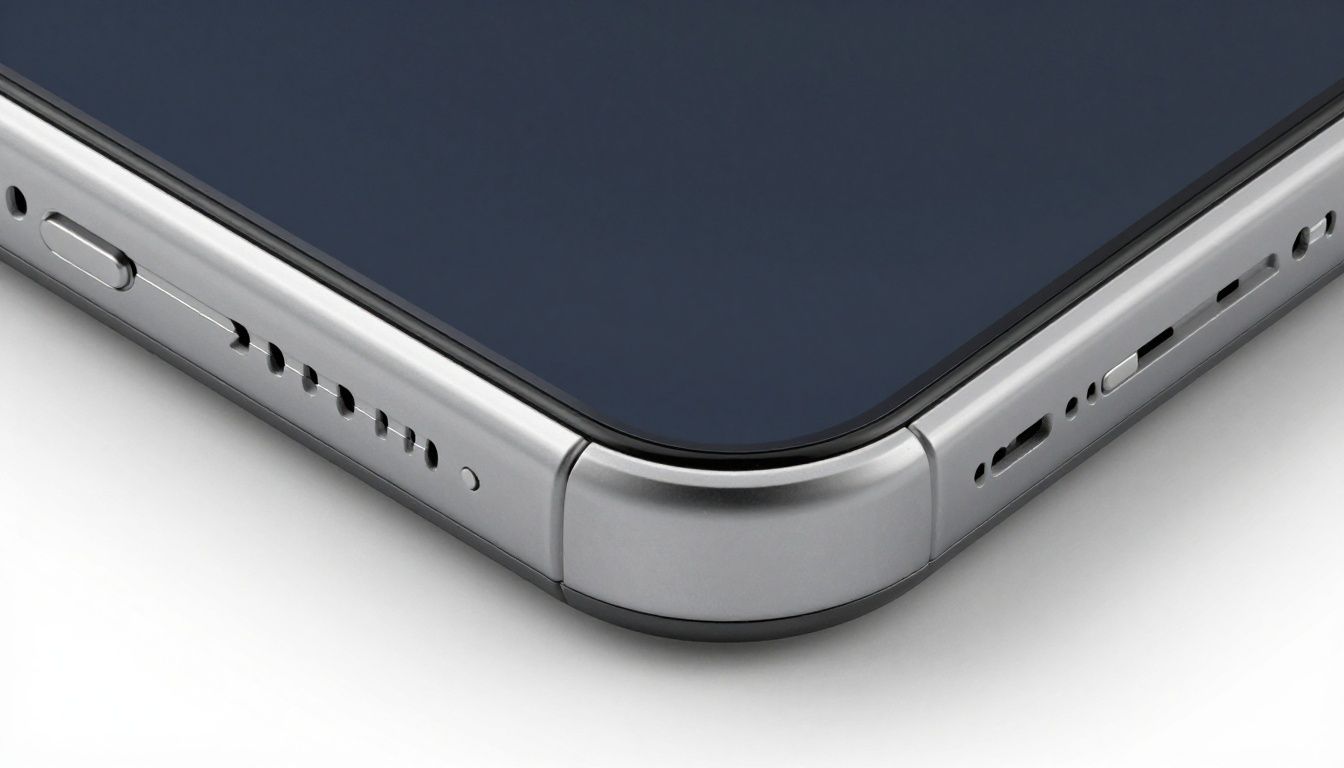
One of the most critical yet simple design features is the raised edge, or lip, that extends slightly above the screen. A raised edges phone case ensures that if you place your phone face down on a flat surface, the screen itself doesn't make contact. This small buffer zone helps prevent scratches from unseen grit on a table or desk.
This feature is also crucial during a drop. If the phone lands flat on its face, the raised bezel takes the initial impact, distributing the force around the frame of the phone rather than directly onto the glass. The same principle applies to the camera housing on the back, where a raised perimeter protects the lenses from scratches and direct hits.
Reinforced Corners for Impact Resistance
Physics tells us that when a phone is dropped, it's most likely to land on one of its corners. This concentrates the entire force of the impact into a very small area, which is a common cause of shattered screens and internal damage. Effective corner protection is therefore non-negotiable.
Many protective cases incorporate specific designs for this vulnerability. You might see thicker, cushioned corners, sometimes with internal air pockets. This technology acts like a tiny airbag, compressing upon impact to absorb and dissipate the shockwave before it can travel through the phone's frame.
The Role of Material and Structure in Shock Absorption
Beyond specific features like corners and edges, the overall material composition and structure of the case play a massive part in its protective capabilities. The choice of material directly influences how a case handles the energy from a fall.
Understanding Shock Absorption
Effective shock absorption is the ability of a case to deform upon impact, soaking up kinetic energy that would otherwise be transferred to the phone. This is why flexible materials like TPU (thermoplastic polyurethane) and silicone are so popular in protective cases.
While a very hard, rigid plastic case might seem tough, it can sometimes transfer impact shock directly to the device or even crack under pressure. In contrast, a slightly softer, more pliable material can flex and rebound, providing a much better cushioning effect against drops.
The Grip Factor: Preventing Drops in the First Place
A truly protective design also helps prevent drops from happening at all. A phone's sleek, smooth finish can be slippery, but a case can add much-needed traction. Look for designs with textured sides, matte finishes, or ergonomic contouring.
These features enhance your hold on the device, making it less likely to slip from your hand. It's a proactive approach to protection that is often overlooked but provides practical, everyday benefits.
Frequently Asked Questions
Does a thicker case always mean better protection?
Not necessarily. Smart design often matters more than sheer thickness. A slim case with reinforced corners, raised edges, and a shock-absorbent material can offer better protection than a bulky case that lacks these specific features.
Will a case with raised edges make my phone feel too bulky?
Modern case designs focus on providing protection without compromising usability. The raised lips are often very subtle, adding only a millimetre or two, which is enough to protect the screen and camera without making the phone feel cumbersome.
Are hard plastic cases or soft flexible cases better for drops?
For shock absorption, flexible materials like TPU are generally superior. They can bend and compress to disperse the energy from an impact. Hard cases can be good for preventing scratches and punctures, but they are often less effective at managing the shock from a drop.
Practical takeaway
When selecting your next phone case, look past the surface-level appearance. Pay attention to the core elements of phone case design protection: a raised lip for the screen, reinforced corner protection, and a material that provides both grip and shock absorption. These features are the hallmarks of a case that offers genuine peace of mind.