


Can a Phone Case Replace a Screen Protector?
Posted by New Case on 5th Mar 2026
Deciding how to best protect your smartphone can be confusing. With modern phone cases offering robust designs and raised edges, many people wonder if a separate screen protector is still necessary. This brings up a common debate: in the contest of case vs screen protector, can one truly replace the other?
While a high-quality case is a crucial first step, it's important to understand that cases and screen protectors are designed to handle different types of threats. They work best as a team, not as substitutes.
How Phone Cases Protect Your Screen
A good phone case is your device's first line of defence against drops and impacts. Its primary role is to absorb shock that would otherwise travel through the phone's frame and potentially damage internal components or crack the screen.
Most modern cases feature a raised lip or bezel around the edge of the display. This design provides excellent phone case screen protection by ensuring the screen doesn't make direct contact with a surface if it falls flat. The case's corners are also typically reinforced to cushion against the most common and damaging types of drops.
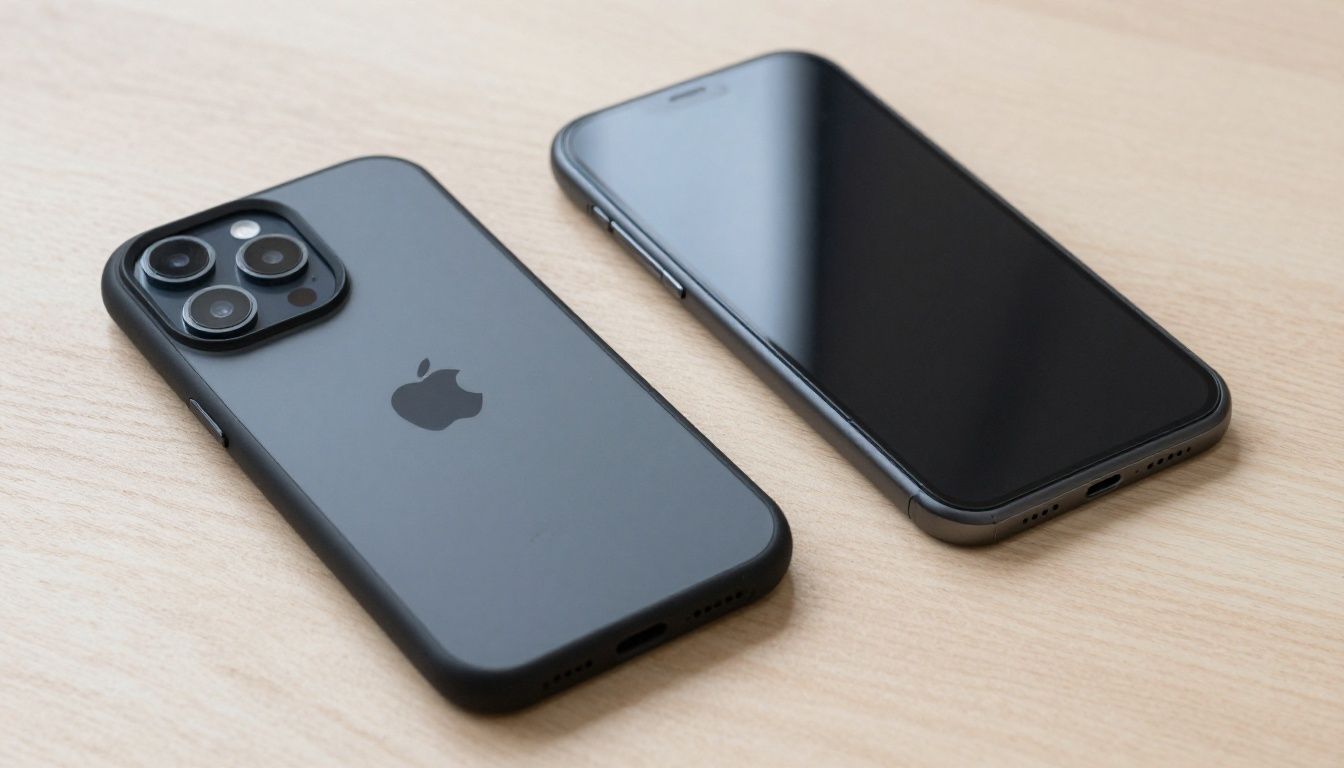
However, this protection is most effective against flat surfaces. The screen remains exposed to direct threats, which is where a dedicated protector comes in.
The Role of a Dedicated Screen Protector
A screen protector's job is to guard the display itself from direct harm. It acts as a sacrificial layer, taking the scratches and impacts so your phone's actual screen doesn't have to. This is crucial for preventing the kind of damage a case simply can't.
Consider the everyday items your phone encounters:
- Keys in a pocket or bag: These can easily cause deep scratches on an unprotected screen.
- Grit on a tabletop: Sliding your phone across a seemingly clean surface can result in micro-abrasions.
- Accidental drops on uneven ground: A fall onto gravel or a rough footpath can cause a direct impact point on the screen that a case's raised edges can't prevent.
A tempered glass protector is particularly effective as it not only resists scratches but can also absorb the force of a direct impact, often cracking itself while keeping the screen underneath perfectly intact.
When a Case Alone Isn't Enough
To understand why both are often needed, think about a few realistic scenarios. A case might save your phone if it slips from your hand onto the kitchen floor. The raised edges and shock-absorbent material will likely prevent any damage.
But what if you drop it in a car park? An unprotected screen landing on a small piece of gravel could easily result in a chip or crack. Likewise, tossing your phone into a backpack with keys, pens, or other hard objects is a common way for screens to get scratched, something a case offers no protection against.
For those who lead an active lifestyle, work in trades, or simply have children around, the risk of direct screen damage is significantly higher. This is where the question of 'do you need a screen protector?' is answered with a clear yes.
Frequently Asked Questions
Do modern phone screens like Gorilla Glass still need a protector?
Yes. While glass technologies have improved immensely, they are still scratch-resistant, not scratch-proof. A tempered glass protector provides a replaceable, sacrificial layer that is much cheaper to swap out than an entire phone screen.
Will a screen protector affect my phone's touch sensitivity?
High-quality tempered glass protectors are designed to be incredibly thin and clear, having a minimal effect on touch sensitivity or display quality. For most users, the difference is unnoticeable after a day or two of use.
I'm very careful with my phone. Is a screen protector necessary for me?
Even the most careful person can have an accident. A screen protector is a small, one-time investment that provides peace of mind against the unexpected. It protects not just from drops, but from the cumulative effect of tiny, everyday scratches.
Practical takeaway
A phone case and a screen protector perform different but complementary jobs. A case protects your phone's body and edges from drops, while a screen protector guards the display against direct impacts and scratches. For the most comprehensive protection, using both together is the most effective strategy.